
Turning values into everyday choices
It is one thing to name your values; it is another to let them steer the way you live. Words like integrity, family, growth, kindness, and freedom sound good on a page, but they only come alive when they can be seen in your diary, your inbox, your conversations, and the way you spend your energy. A value becomes real when it shows up as a choice you make on a Tuesday afternoon, not only as a sentence you wrote in a workshop.
Think about health. As an idea it is easy to agree with, as a value in action, it looks like preparing real food when you are tired, getting outside when the couch is calling, choosing a sensible bedtime when one more episode is tempting. Family reads well in a list, yet you feel it when someone silences their phone at dinner, leaves a meeting in time for the school concert, or slows down enough to listen to a story they have already heard. Kindness does not need a slogan; you notice it in a colleague who gives credit freely, or in the message that owns a mistake and offers to repair it. Growth is not the poster that says never stop learning; it is the awkward first class, the draft you share before it is perfect, the request for feedback that you would rather avoid.
Values rarely arrive as grand gestures. Most of the time, they are quiet and repetitive, small acts that accumulate into a life that feels aligned. You will not remember every run or every early night; you will remember the steadiness that follows. You will not remember every moment you chose presence over productivity; you will remember the trust that grows. In this sense, values are less about intensity and more about rhythm. They are not a one-off declaration; they are a pattern you rehearse until it becomes part of you.
Living a value often requires a boundary, and the boundary is where many people wobble. If you value health, you may need to protect a few non-negotiables around sleep, food, and movement, then tolerate the discomfort of saying no to late emails or one more drink. If you value family, you may need to leave on time even when others stay, then sit with the fear that you will be judged. If you value honesty, you may need to say the uncomfortable thing kindly and cleanly, then resist the urge to smooth it over. Boundaries are not defiance; they are the shape that lets a value exist in the real world. It helps to remember that actions sit on top of beliefs. You can value growth, yet if you believe you must be perfect before you start, you will not move. You can value family, yet if you believe your worth depends on constant availability, you will keep saying yes. Alignment improves when you update the stories that block your values. Try this as an experiment for a week. Name one value that matters right now, write one small belief that would support it, then choose one action to practise daily. Health, I believe consistency beats intensity. I will walk for twenty minutes before lunch. Family, I believe presence matters more than volume. I will give the first twenty minutes after work with my phone away. Honesty, I believe clarity is kindness. I will send the difficult note today and offer a conversation. The point is not to be perfect; the point is to let action teach you.
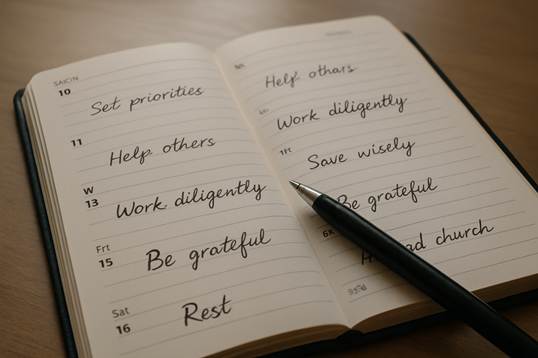
If you want a simple way to check whether your values are visible, look at your calendar, your spending, and your attention. The calendar shows what you prioritise with time, the spend shows what you prioritise with resources, and the attention shows what you prioritise with focus. If none of these reflect your stated values, do not shame yourself; get curious. Ask what small swaps would move reality closer to intention. Replace one hour of low-value screen time with a call to a friend. Swap one rushed lunch for food that actually fuels you. Trade one reflex, yes, for a considered no, then notice the relief that follows. Small, repeated adjustments change the texture of a week, and a string of aligned weeks changes the feel of a life.
You will know values are in action when decisions feel cleaner and self-respect grows. You will not always choose the easy thing; you will choose the thing that lets you look yourself in the eye. Sometimes you will drift; everyone does, then the value works like a compass and brings you back. Sometimes the value will compete with another; that is part of being human, then you will choose as wisely as you can and review with kindness. Over time, the gap between what you say matters and how you live will narrow, and with it, the quiet friction that once sat in the background will ease.
This piece is the sixth article in a series exploring values and beliefs. Next, I will bring the threads together by looking at how to align values, beliefs, and everyday action so that your choices match what matters most.